
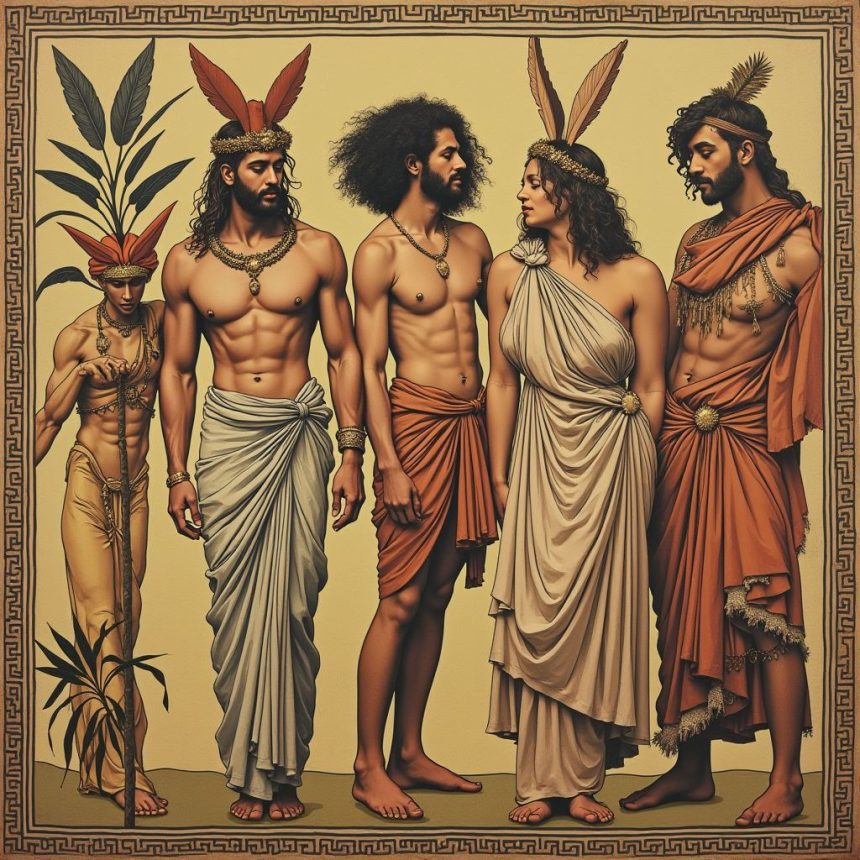
1. The Fantasy of Aphrodite: The Greatness of Aphrodite as the Goddess of Love and Beauty in Greek Mythology
Aphrodite, the goddess of love and beauty in Greek mythology, was one of the central deities in the phenomenon of love and sexuality. As the daughter of Zeus and Diana, Aphrodite is considered a symbol of beauty and female sexuality in Greek culture. She is regarded as the goddess of love and souls, as well as the ruler of nature and fertility. In Greek mythology, Aphrodite is depicted as a young and beautiful maiden, capable of making all hearts fall in love with her.
Aphrodite is also considered a symbol of passion and intimate desire, hence she is also called “the leader of amorous struggles.” In mythology, many see Aphrodite as a polar figure representing the cool power of women and their ability to dominate men. The complex fantasy of Aphrodite makes her the perfect goddess of love, representing the feminine ideal of perfection and beauty.
Aphrodite is also considered the goddess of truth and simplicity, reminding us that beauty is always just a cover for our inner truth. In Greek mythology, Aphrodite was known as the goddess of beauty and love, and stories about her were diverse and interesting.
Ultimately, Aphrodite represents the uniqueness and charm of love and beauty in Greek mythology. She sounds like a story from Greek mythology, but in reality, she is a story that reminds us of the human ability to deal with the forces of love and beauty in our lives.
2. Nicodemus and the Profound Love: The Amazing Story of Nike and Osis in Greek Mythology
Nicodemus was the god of duality and the soul, and he is considered the god responsible for love and affection. In Greek mythology, Nicodemus is considered one of the most important gods, representing true and profound love.
Love is like the sun – it brightens our lives.
Aristophanes – Greek writer
The amazing story of Nicodemus and Osis tells of a love relationship between the god of love and the beautiful nymph. Osis, the beautiful nymph, fell in love with Nicodemus and asked to be with him forever. Nicodemus, on his part, also fell in love with Osis and chose to live with her in eternal love.

Nicodemus and Osis were diverse in their experiences and heartbreaks, but in the end, their love triumphed. They became symbols of true and infinite love, showing all creatures the power of love to overcome all kinds of obstacles.

The story of Nicodemus and Osis reminds us that love is the greatest force in the world, and it has the power to change our future and transcend all boundaries. In Greek mythology, Nicodemus and Osis are a wonderful example of true love that is unforgettable.
The journey of Nicodemus and Osis reminds us that love is the most powerful force in the world, and it has the power to change our future and transcend all boundaries. In Greek mythology, Nicodemus and Osis are a wonderful example of true love that is unforgettable.
In conclusion, Nicodemus and his profound love with Osis are an emotional story that strengthens faith in the true power of love and its ability to change our world for the better.
3. The Marvelous Youth Symbols: The Role of Love, Sex, and Beauty in Greek Mythology
Love is a force that has no competition in the world.
Homer – Greek poet
In Greek mythology, the marvelous youths are a group of young gods considered symbols of love, sex, and beauty. They are attributed with alternative abilities like the youth era, freedom, and stability. In mythology, the marvelous youths are considered a modern version of ancient gods.
Love and sex were inseparable parts of the lives of gods and humans in Greek mythology. The marvelous youths were a perfect couple of love and sex, and they are considered symbols of spiritual and physical connection between gods and humans.

The beauty and sensuality of the marvelous youths were dazzling and alluring like a colorful bouquet of flowers. They represent the Greek approach to beauty, culture, and morality.
In Greek mythology, the marvelous youths also serve as symbols of youthful life, with all its renewing, wild, and complex feelings. They remind us that life is like a spiritual journey, and that love, sex, and beauty are inseparable parts of the human experience.
4. Intimate Details in the Theater of Challenges: The Connection Between Love and Death in Greek Mythology
Greek mythology reflects the eternal struggle between love and death through mythical characters and stories. In Greek theater, the connection between love and death is presented in a magnificent and complex way, and the intimate details between them reflect the power of human emotions.
One of the most well-known erotic symbols in Greek mythology is the connection between Aphrodite, the goddess of love and beauty, and the dark underworld lord known as Hades. Many stories speak of the forbidden and dangerous connection between the two characters, representing the eternal struggle between life and death.
In Greek theater, the appearance of characters like Persephone, the goddess of death, and Apollo, the god of light and healing, reflects human suffering and the struggle between the opposing forces of life and death. The tension between love and death is presented magnificently in theater, and the intimate details between the characters give a deeper dimension to the stories and messages conveyed.
In Greek mythology, the erotic characters serve as symbols for deep and complex human emotions, and the combination of love and death paints the most intimate struggle between the two forces that lead human lives. Greek theater wonderfully presents the eternal struggle between love and death, reminding us that they are two inseparable forces that influence our lives at every moment.
In conclusion, the connection between love and death in Greek mythology reflects the human struggle between life and death, and the intimate details between the characters give us a deep insight into the eternal struggle between the two leading forces in our lives. From the mythical stories and characters, we learn about the human emotions and internal conflicts, and the eternal struggle between love and death that accompanies us throughout history.

5. The Era of Endless Love: How Greek Mythology Tells Its Fascinating Love Stories
Greek mythology reflects a vast world of love stories, depicting deep emotions, complex rivalries, and connections between gods and humans. In the era of endless love in Greek mythology, unique heroes and gods are found in fascinating stories of love, cosmos, and combat.
Among the most beloved stories in Greek mythology is the tale of Aphrodite and Adonis, written by the Greek poet John Milton. In this story, Aphrodite, the goddess of love, falls in love with Adonis, a beautiful young man. They fall in love with each other and begin a passionate love affair.
Another fascinating love story in Greek mythology is the tale of Diana and Actaeon. Diana, the goddess of the hunt, falls in love with Actaeon, a handsome and young hunter. They fall in love with each other and begin a love affair that takes place between the world of gods and humans.
Another fascinating love story in Greek mythology is the tale of Eros and Leon. Eros, the goddess of cold, falls in love with Leon, a handsome and strong young man. They fall in love with each other and begin a love affair that takes place between the world of gods and humans.
In these stories, we can see the immense power of love and the complex relationships between gods and humans in Greek mythology. The fascinating love stories of Greek mythology teach us about the power of love and the special connections between gods and humans.
Love is the adventure of the heart and soul.
Plato – Greek philosopher
6. The Secret of Reflection: How Erotic Symbols are Reflected in Modern Culture and Contemporary Art
Erotic symbols from Greek mythology have always served as tools for expressing various ideas and themes, and they continue to influence modern culture and contemporary art. When looking at modern art pieces, one can see how erotic symbols are reflected and impact our works and culture in this era.
In modern art, erotic symbols appear primarily as figures and are depicted in an abstract and symbolic way. They represent themes of passion, love, beauty, and femininity in a way that arouses interpretation and deep emotional response. These symbols use shapes and colors to convey their emotional and spiritual message, influencing our emotions and significance.
In modern culture, erotic symbols also serve as tools for expressing courage and self-freedom, reminding us of the eternal search for truth and beauty. While they appear in reality, they give us a sense of connection to the past and present, evoking feelings of love, sensuality, and beauty.
In contemporary art, erotic symbols are reflected mainly through the use of innovative techniques and new materials, presenting erotic themes in a fascinating and remarkable way. They use a connection between traditional and contemporary art to create works that preserve and continue the erotic symbols in our culture.
Ultimately, erotic symbols from Greek mythology are an inseparable part of our history and culture, and they continue to influence our works and culture today. Through understanding and appreciation, we can better understand ourselves and the world around us, experiencing the timeless beauty and courage of erotic symbols in every culture and every time.