
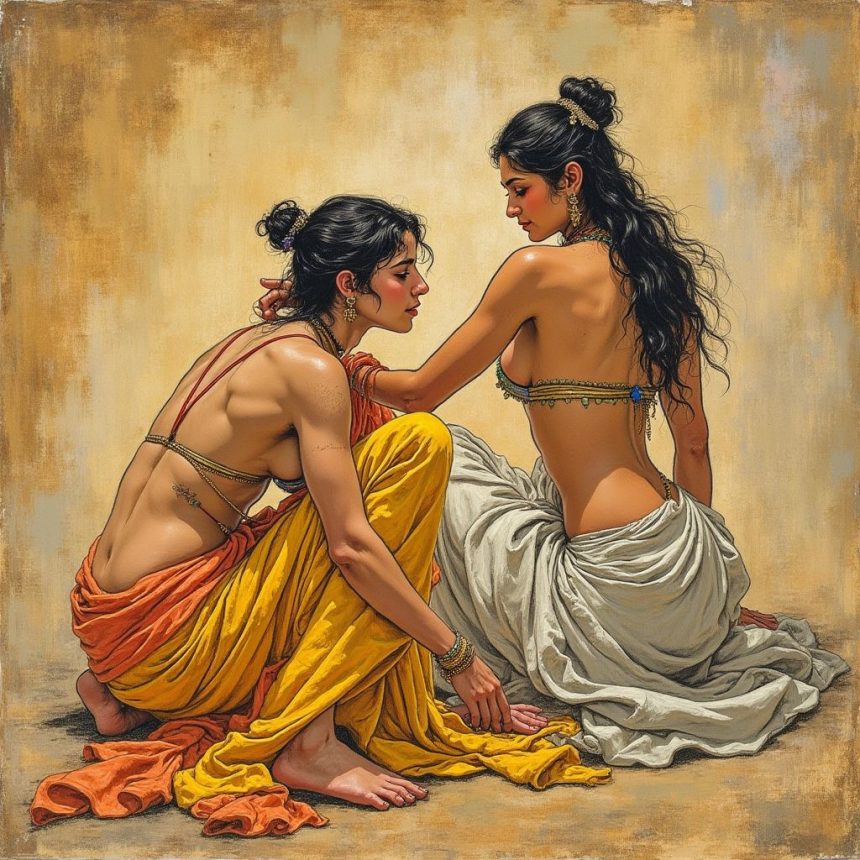
Description of the Concept of “Erotica” in Ancient Indian Culture
Erotica in ancient Indian culture was an integral part of everyday life for the people in the region. In ancient Indian texts, such as the Ramayana, Mahabharata, and Kamasutra, there are plenty of ideas and descriptions of erotic and sexual scenes. Throughout history, sexual depictions have been an inseparable part of the daily lives of Indian men, considered a natural part of life.
In ancient Indian texts, the concept of “erotica” touched on every subject and field, from the private lives of Indian men, through music and dance, to clear sexual scenes. Erotica in ancient Indian culture was a complex concept that included the connection between humans and the divine, and the bold passion for life.
In ancient Indian texts, descriptions of sexual lives, erotic scenes, and descriptions of love between people and between humans and the divine can be found. All of these are part of the ancient culture of the Indians, where erotica was an integral part of people’s daily lives.

In conclusion, erotica in ancient Indian culture was an integral part of the daily lives of the people in the region, and it was part of the culture and society in which they lived. In ancient Indian texts, there are plenty of ideas and descriptions of erotic and sexual scenes that touched on every subject and field in people’s lives.
Love is a potential force that can suddenly appear anywhere and at any time
Dr. Robert Stern – Psychologist
The Influence of Erotica on Sexual Fantasies in Ancient Indian Texts
In ancient Indian texts, we find the unique characteristics of erotica that influence the sexual fantasies of readers. India is one of the oldest cultures in the world, and in its texts appear the erotic motifs and descriptions that arouse great interest. Through dazzling writing, Indian authors succeed in conveying in a fascinating way the erotic and sexual world of the characters in their works.
Erotica in ancient Indian texts reflects the mythological culture and heritage of the land, and therefore influences the sexual fantasies of readers around the world. Descriptions of relationships between men and women, descriptions of physical contact, and descriptions of love-evoking emotions are just a part of the rich imagination that translates erotica in Indian writings.
In Indian texts, there are descriptions of sexual relationships between people, between people and deities, and between deities and other deities. The detailed and magnificent descriptions stimulate the imagination and provide readers with a fascinating and enjoyable reading experience. Erotic characters and passion-filled stories offer readers the opportunity to glimpse into the inner world of the heroes and heroines, and experience deep feelings of passion and love.
In summary, it can be said that erotica in ancient Indian texts deeply influences the sexual fantasies of readers. Through dazzling and detailed descriptions, authors manage to convey the erotic world of the characters in such a captivating way that it is hard to ignore.
Description of Sexual Scenes in Ancient Indian Texts
Erotica in ancient Indian texts is a fascinating subject that greatly interests researchers and scholars in cultures and sexual events around the world. In ancient Indian texts, there are sexual scenes that vividly and detailedly depict the culture and sexual life at that time and place.
A wide and diverse picture of human and sexual relationships between people from all social classes is presented in these scenes. These scenes describe family systems, culture, society, and love, as well as sexual scenes showing the sexual relationships between men and women at that time and place.
Every time I think of love, I think of the most beautiful book in the world
Ana Frank – Writer
The sexual scenes in ancient Indian texts are creatively and masterfully done, offering an interesting and mysterious picture of the culture and sexual life at that time and place. They provide a deep and fascinating insight into the sexual heritage of India and the sexual relationships between people at that time and place.
In ancient Indian texts, the sexual descriptions depict the sexual and cultural heritage of India in an artistic and fascinating way. They allow researchers and scholars to understand and appreciate the culture and sexual life at that time and place, and to gain a deep and fascinating view of the sexual relationships between people at that time and place.

The Influence of Local Culture on Sexual Fantasies in Ancient Indian Texts
Ancient Indian culture was full of sexual fantasies that can be found in the ancient texts that have survived to this day. The local culture of India that dates back thousands of years has influenced the development of sexual ideas and concepts expressed in ancient texts.
In ancient Indian texts, detailed descriptions of sexual activities and various behaviors that were common at that time can be found. Writing about these topics was fascinating and challenging even for the present day, providing deep insights into the culture and society of that time.
Ancient Indian texts also feature mythological figures related to sexuality, such as Kama Sutra and Rama. These figures serve as role models for sexual fantasies and help understand the relationship of Indian culture to the topic of sexuality.
The influence of local culture on sexual fantasies in ancient Indian texts emphasizes how the social, religious, and cultural factors of the local culture shape the sexual perceptions and ideas of people at that time.
Comparison of Erotica in Ancient Indian Texts to Erotica in Other Cultures Around the World
Erotica in ancient Indian texts reflects the mystical and romantic culture of the region. These texts describe stories of love, passion, and darkness, while addressing the religious and social values of the time. In contrast, in other cultures around the world, such as Mediterranean and Japanese cultures, erotica focuses on different motifs and not in the religious and social context.

In ancient Indian texts, detailed descriptions of erotic scenes are found, expressing the uniqueness of Indian culture and its attitude towards love and passion. In contrast, in other cultures around the world, such as Japanese culture, erotica is absent from the texts and focuses on artistic works, such as sculptures and paintings, symbolically and abstractly depicting love and passion.
In ancient Indian texts, erotica is described as an inseparable part of daily life and the social system, while in other cultures it appears as a private matter. Thus, comparing erotica in ancient Indian texts to erotica in other cultures illustrates the differences and similarities between the various cultures in the world, and how each of them relates to love and passion.
Love is the ability to be who I am, while still being who I can be
Michel Foucault – Philosopher